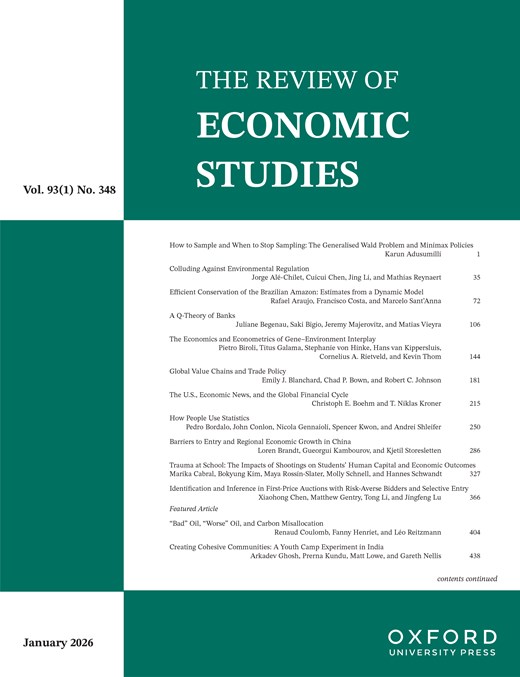
‘Bad’ Oil, ‘Worse’ Oil, and Carbon Misallocation

  • Auteur/autrice de la publication :
  • Publication publiée :
  • Catégorie de la publication :

Not all barrels of oil are created equal: their extraction varies in both private cost and carbon intensity. Leveraging a comprehensive micro-dataset on world oil fields, alongside detailed estimates of carbon intensities and private extraction costs, this study quantifies the additional emissions and costs from having extracted the ’wrong’ deposits. We do so by comparing historical deposit-level supplies to counterfactuals that factor in pollution costs, while keeping annual global consumption unchanged. Between 1992 and 2018, carbon misallocation amounted to at least 11.00 gigatons of CO2-equivalent, incurring an environmental cost evaluated at $2.2 trillion (US$ 2018). This translates into a significant supply-side ecological debt for major producers of high-carbon oil. Looking forward, we estimate the gains from making deposit-level extraction socially optimal at about 9.30 gigatons of CO2-equivalent evaluated at $1.9 trillion along a future aggregate demand pathway coherent with the objective of net- zero emissions in 2050, and document unequal reserve stranding across oil nations.
Continuer la lecture‘Bad’ Oil, ‘Worse’ Oil, and Carbon Misallocation

Support for renewable energy: The case of wind power

  • Auteur/autrice de la publication :
  • Publication publiée :
  • Catégorie de la publication :

The rise of societal goals like climate change mitigation and energy security calls for rapid capacity growth in renewable electricity sources, yet citizens’ support is put to a test when such technologies emit negative local externalities. We estimate the impact of wind turbine deployment on granular measures of revealed preferences for renewable electricity in product and political markets. We address potentially endogenous siting of turbines with an IV design that exploits quasi-experimental variation in profitability induced by subsidies. We find that wind turbines significantly reduce citizens’ support locally, but this effect quickly fades with distance from the site. We assess policy instruments for enhancing citizens’ support for renewable energy in light of our results.

Continuer la lectureSupport for renewable energy: The case of wind power

Heterogeneity in the productivity of French construction firms: a multilevel analysis

  • Auteur/autrice de la publication :
  • Publication publiée :
  • Catégorie de la publication :

This paper examines the determinants of productivity heterogeneity among construction firms, integrating both firm-level and local contextual factors. Using a longitudinal dataset of 78,598 firms over 2009–2019, we estimate total factor productivity (TFP) and use a multilevel model across 287 labour market areas in metropolitan France. This approach allows us to separate firm-specific from location-specific effects and explains how the productivity heterogeneity can be attributed to each level. Our results show that firm characteristics significantly affect TFP. Local conditions also play a key role: higher unemployment reduces productivity, whereas higher employment density and median income enhance it. This study contributes by applying a multilevel framework to the construction sector, using longitudinal data for precise estimation, and employing TFP rather than traditional labour productivity as the performance measure. Our findings highlight the joint influence of firm and regional factors on productivity, providing insights for policymakers and managers aiming to improve firm performance and regional economic outcomes in the construction sector. Our results remain robust across different firm size categories, alternative TFP measures, French construction sector sub-sectors and Mundlak's (1978) approach to correcting for heterogeneity bias.

Continuer la lectureHeterogeneity in the productivity of French construction firms: a multilevel analysis

Do Carbon Offsets Offset Carbon?

  • Auteur/autrice de la publication :
  • Publication publiée :
  • Catégorie de la publication :

We develop and implement a new method for identifying wasted subsidies and use it to provide systematic evidence of the misallocation of carbon offsets in the Clean Development Mechanism—the world's largest carbon offset program. Using newly constructed data on the locations and characteristics of over 1,000 wind farms in India, we estimate that at least 52 percent of approved carbon offsets were allocated to projects that would very likely have been built anyway. We estimate that the sale of these offsets to regulated polluters resulted in substantially higher global carbon dioxide emissions.

Continuer la lectureDo Carbon Offsets Offset Carbon?

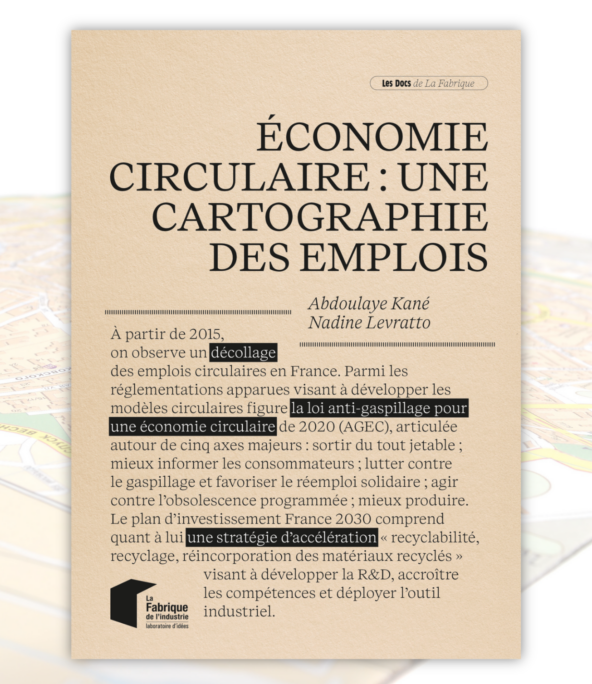
Economie circulaire : Une cartographie des emplois

  • Auteur/autrice de la publication :
  • Publication publiée :
  • Catégorie de la publication :

L’emploi dans l’économie circulaire progresse en France, mais les territoires en bénéficient inégalement. En cartographiant son évolution entre 2009 et 2024, Abdoulaye Kané et Nadine Levratto analysent les caractéristiques locales associées à son développement et soulignent le rôle des complémentarités entre secteurs d’activité.

Continuer la lectureEconomie circulaire : Une cartographie des emplois

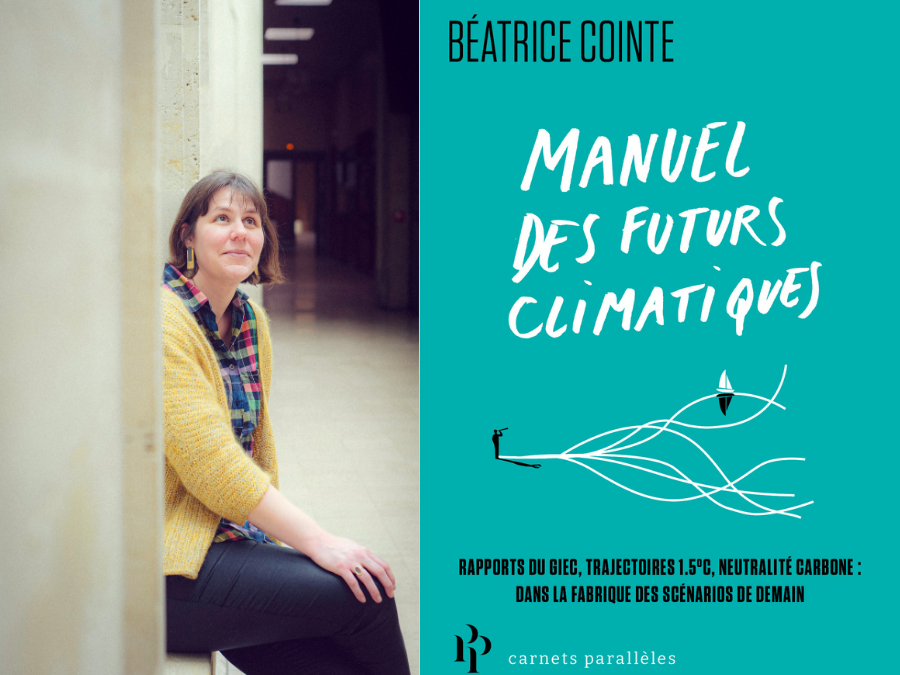
Parution de l’ouvrage “Manuel des futurs climatiques : entre science, diplomatie et économie”

  • Auteur/autrice de la publication :
  • Publication publiée :
  • Catégorie de la publication :

Un ouvrage de terminologie climatique ? Oui mais pas seulement, Béatrice Cointe,  nous entraîne dans les coulisses du GIEC, véritable tour de Babel scientifique, où se rencontrent des chercheurs de nationalités et de cultures diverses, dont les disciplines n'ont parfois rien en commun.

Continuer la lectureParution de l’ouvrage “Manuel des futurs climatiques : entre science, diplomatie et économie”

Thématique C : Politiques, instruments, innovations pour la transition écologique

  • Auteur/autrice de la publication :
  • Publication publiée :
  • Catégorie de la publication :

Responsables Description La transition écologique est un défi pour l’action collective comme pour la pensée. Comment se représenter ses exigences : transition ? rupture ? adaptation ? innovation ? A partir de quels savoirs,…

Continuer la lectureThématique C : Politiques, instruments, innovations pour la transition écologique