
Cognitive activities in architectural design
Safin, S. (Ed.) (2025). Cognitive activities in architectural design. Wiley and sons. Equipe SES
Safin, S. (Ed.) (2025). Cognitive activities in architectural design. Wiley and sons. Equipe SES
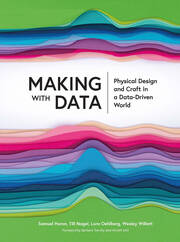
How can we give data physical form? And how might those creations change the ways we experience data and the stories it can tell? Making with Data: Physical Design and Craft in a Data-Driven World provides a snapshot of the diverse practices contemporary creators are using to produce objects, spaces, and experiences imbued with data. Across 25+ beautifully-illustrated chapters, international artists, designers, and scientists each explain the process of creating a specific data-driven piece—illustrating their practice with candid sketches, photos, and design artifacts from their own studios. The author website, featuring updates and more information about the projects behind the book, can be found here: https://makingwithdata.org/. Featuring influential voices in computer science, data science, graphic design, art, craft, and architecture, Making with Data is accessible and inspiring for enthusiasts and experts alike.
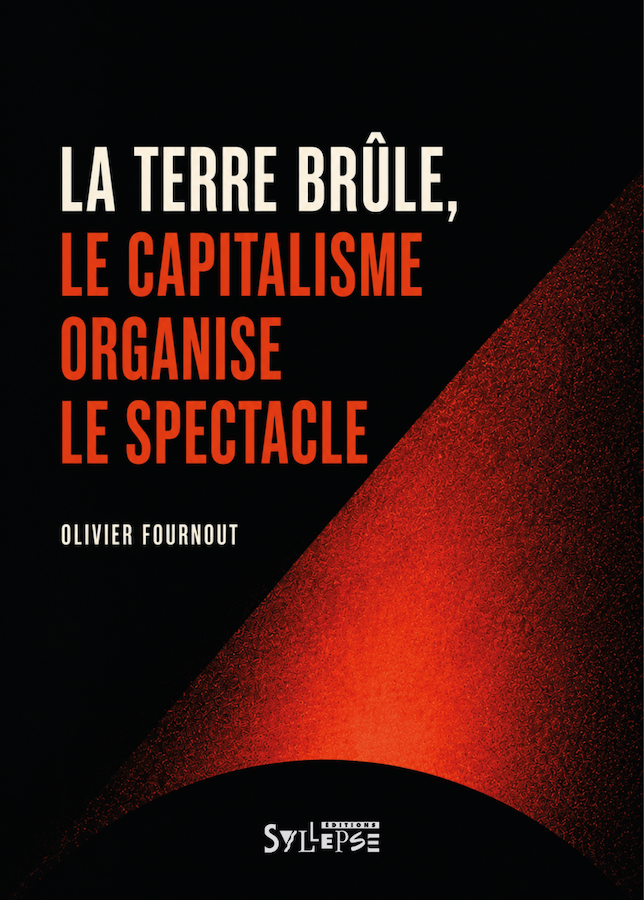
La catastrophe écologique est connue. Depuis des décennies, les alertes ont été lancées, les causes identifiées, les solutions discutées. Pourtant, rien ou presque ne change. Pourquoi? Olivier Fournout déplace la question. Le capitalisme ne se contente pas de produire la catastrophe: il organise les conditions de son impuissance à l’empêcher. Mieux encore, il parvient à transformer cette catastrophe en spectacle et à se présenter comme celui qui pourra nous en sauver. Au cœur de ce paradoxe se trouve ce que l’auteur nomme un «antimodèle de réussite»: une société qui accumule compétences, innovations et performances, tandis que leur somme produit une incapacité magistrale à préserver les conditions mêmes de la vie. Management, médias, publicité, art, discours sur la transition, injonctions à la responsabilité individuelle : grâce à de nombreux exemples, Olivier Fournout démonte les mécanismes matériels et symboliques qui étouffent les alternatives et maintiennent le cap alors même que l’on sait où il conduit.

Faute d’y descendre, nous ignorons pour la plupart qu’une vie parallèle se trame sous nos pieds, dans les tréfonds de la terre. Du sous-sol, on sait que des ressources en sont extraites ; on sait moins ce que l’on y enfouit désormais. C’est que les mines ne sont pas seulement le berceau des révolutions industrielles, elles sont aussi le réceptacle de ses produits dérivés, qu’il s’agisse de déchets industriels ou de CO2. Dans ce livre à la tonalité narrative, Lisa Claussmann explore d’anciennes mines reconverties en sites d’enfouissement de déchets industriels dangereux ou de stockage géologique de dioxyde de carbone industriel – des espaces difficiles d’accès, cachés à la vue. En nous racontant ce qui s’est passé ou se passe sous nos pieds – sous les villages dans lesquels nous aimons nous promener, sous les eaux dans lesquelles nous baignons, à proximité d’espaces protégés –, elle propose une autre histoire de la croissance et révèle un monde parallèle, au cœur des paradoxes de notre modernité écologique. Un monde tenu à distance qui fait du sous-sol le commencement et la fin du progrès industriel.
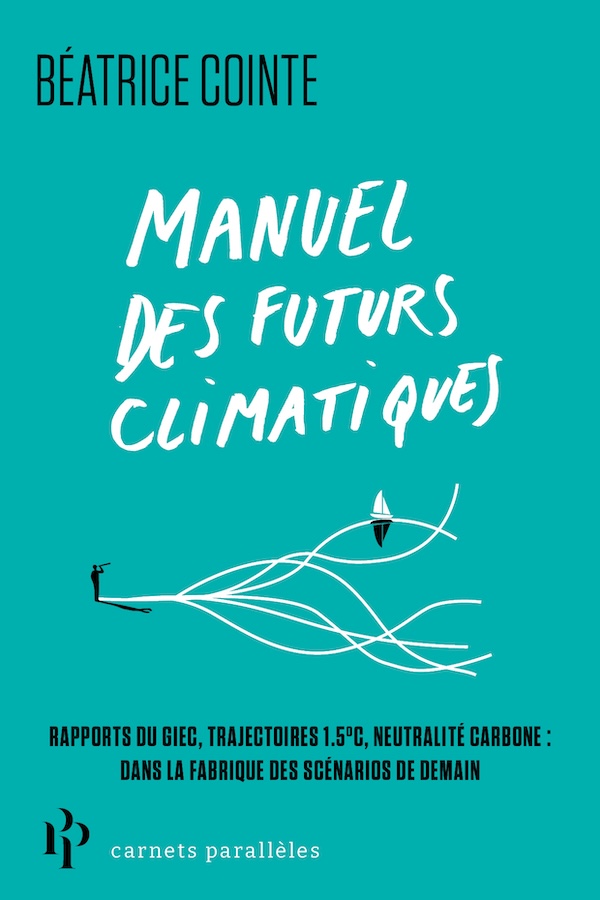
Cela fait près d’un demi-siècle que l’action climatique se conjugue au futur. Ce sujet, plus qu’aucun autre, rappelle que le futur est politique, et donc discutable. Le problème, c’est que les futurs climatiques s’écrivent et se discutent dans un langage souvent impénétrable, sur lequel nous n’avons pas prise. Scénarios du GIEC, trajectoires 1.5°C, transition énergétique, overshoot… autant de termes omniprésents dès qu’il est question de climat, mais qu’on n’est guère équipés pour comprendre. Ce livre les raconte en se plaçant à une échelle humaine : en suivant celles et ceux qui travaillent avec au quotidien et en décortiquant les outils qu’ils utilisent pour le faire. Il décrit les infrastructures qui soutiennent leur travail et rend compte de leurs questionnements, de leurs désaccords et de leurs désarrois – qui sont aussi les nôtres. Découpé en une série d’entrées qui se penchent sur les modèles informatiques, les infrastructures de recherche et les objets des sciences de l’atténuation du changement climatique, ce petit livre est un guide de lecture des scénarios climatiques. Écrites de manière vivante et incarnée, elles permettent aux lecteurs de comprendre comment la communauté scientifique s’organise pour faire face au défi climatique.
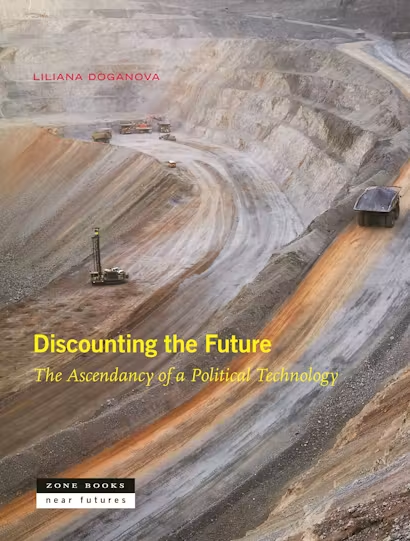
A pioneering exploration of the defining traits and contradictions of our relationship to the future through the lens of discounting Forest fires, droughts, and rising sea levels beg a nagging question: have we lost our capacity to act on the future? Liliana Doganova’s book sheds new light on this anxious query. It argues that our relationship to the future has been trapped in the gears of a device called discounting. While its incidence remains little known, discounting has long been entrenched in market and policy practices, shaping the ways firms and governments look to the future and make decisions accordingly. Thus, a sociological account of discounting formulas has become urgent. Discounting means valuing things through the flows of costs and benefits that they are likely to generate in the future, with these future flows being literally dis-counted as they are translated in the present. How have we come to think of the future, and of valuation, in such terms? Building on original empirical research in the historical sociology of discounting, Doganova takes us to some of the sites and moments in which discounting took shape and gained momentum: valuation of European forests in the eighteenth and nineteenth centuries; economic theories devised in the early 1900s; debates over business strategies in the postwar era; investor-state disputes over the nationalization of natural resources; and drug development in the biopharmaceutical industry today. Weaving these threads together, the book pleads for an understanding of discounting as a political technology, and of the future as a contested domain.
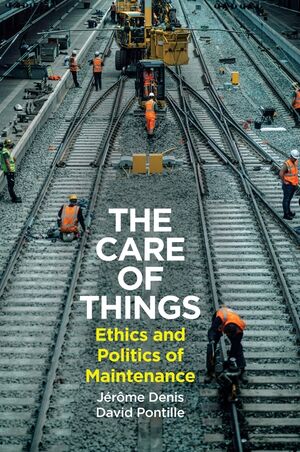
What does a coffee machine, a car, road signs, a smartphone, a cathedral, a work of art, a satellite, a bicycle, a washing machine, a bridge, a watch, a computer, the body of a prominent politician and a tractor have in common? Pretty much nothing – except for the fact that, no matter how small, large, important or insignificant something is, it rarely survives without being cared for. Every object eventually experiences wear and tear, it deteriorates, stops working or breaks down. But are we giving the care of things the recognition it deserves? A counterpoint to our modern obsession with innovation but less striking than the one-off act of restoration, the delicate act of making things last rarely attracts our attention. This book disrupts our dominant narratives by putting those individuals skilled in the art of maintenance front and centre. Jérôme Denis and David Pontille shine a spotlight on the subtle aspects of caring for things, tracing the stories of those involved and, with them, the ethical challenges raised and political lessons learned. These people demonstrate a sensitivity and attentiveness to fragility; they encourage us to cultivate a material diplomacy in which wear is accepted and our relation to things becomes a matter of negotiation and compromise – a far cry from the frenetic rhythm of planned obsolescence inherent in hyper-consumerism. Maintenance demarcates the contours of a world in which we have relinquished the human longing for unlimited power and technological autonomy, a world where our attachment to things is more profound than we ever imagined.
La recherche opérationnelle (RO) ou OR (pour Operations Research) offre des outils pour optimiser et explorer les meilleures solutions à de nombreux problèmes d'aide à la décision et de gestion en entreprise. Ce domaine est également appelé Management Science (MS). Cet ouvrage permet de découvrir les différentes applications de la recherche opérationnelle (production, chaîne d'approvisionnement, finance). Il fournit des outils de modélisation et de résolution par étapes utilisant principalement la programmation linéaire et la théorie des graphes.
Demonsant, C., Hatchuel, A., Levillain, K., & Segrestin, B. (Eds.). 2023. Le changement climatique comme péril commun. Réconcilier action climatique et justice sociale. Paris: Presses Des Mines. Equipe CGS
In this Element, emerging legal forms of purpose-driven corporations are analyzed, revealing two important insights. First, within the traditional corporate law, a purpose is neither protected nor enforceable over time. While companies can have goals beyond profit, these are controlled by shareholders, who also appoint corporate managers. To protect social or environmental ambitions, especially during shareholder changes, a legal commitment from the company is essential. Second, these new legal forms highlight the need to redefine the corporation's legal foundations. In an era when management decisions impact entire populations and the planet, the law inadequately conceptualizes the conditions necessary for responsible management. The Element argues that embedding a purpose in the constitution of corporations can provide these new legal foundations. Ultimately, the Element suggests that purpose provides a unified theoretical framework for understanding the variety of corporate legal forms and for discussing their respective potentials and limitations in holding corporations accountable in the face of upcoming transitions.