In 1951, Cécile DeWitt-Morette, a young physicist not yet thirty years old, founded a summer school with innovative practices in the village of Les Houches in Haute Savoie. This social invention proved to be particularly well suited to the new theoretical physics—so confusing and demanding—that was developing at the time. Very quickly, the Les Houches School of Theoretical Physics established itself as a key institution in the world of physics. Pierre-Gilles de Gennes, one of the many Nobel Prize winners to have passed through Les Houches, did not hesitate to declare that the School “saved his generation of physicists.” Yet outside the circle of the discipline, who knows that a village in Haute Savoie is home to a legendary institution of physics? This book explores, for the first time, using new sociocognitive frameworks, the workings and effects that have earned the École des Houches worldwide prestige.

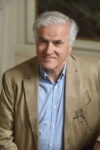
Chipten Valibhay is a researcher and lecturer at Mines Paris – PSL University. His work focuses on institutions that support scientific and technical creativity.
Armand Hatchuel is professor emeritus at Mines Paris – PSL University. Together with Benoît Weil, he developed the formal theory of creative reasoning. He is a member of the French Academy of Technologies.
Cécile Morette-DeWitt (1922–2017), founder of the École des Houches, is one of 72 women whose names will be inscribed on the Eiffel Tower.
After studying mathematics, physics and chemistry, she began working at the CNRS in the Joliot-Curie laboratory in 1944. Invited to Princeton by Oppenheimer, she married the American physicist Bryce De Witt. To promote French physics internationally, in 1951 she and Yves Rocard founded the École de Physique des Houches, a summer school offering advanced courses in theoretical physics and attended by students from all backgrounds, including several future Nobel Prize winners. This initiative contributed to exchanges between researchers from different countries after the war, while also training young people. The strong international influence of French physics led her to become a consultant to NATO’s Scientific Affairs Division. Her work lies at the intersection of mathematics and theoretical physics. She rigorously establishes the concept of integrals on Feynman paths, the basis of quantum physics, and works on black holes and rainbows, as well as verifying Einstein’s theory of relativity
during a solar eclipse.